
Does Postcard Marketing Really Work?
Postcard marketing is one of the most efficient marketing methods accessible today, and technology has made automating profitable postcard marketing campaigns easier than ever before.
Have you ever received a Google advertising credit or a postcard from a major eCommerce brand like Dollar Shave Club in the mail? If that’s the case, you may have wondered… Is direct mail still a viable option? Is postcard marketing effective?
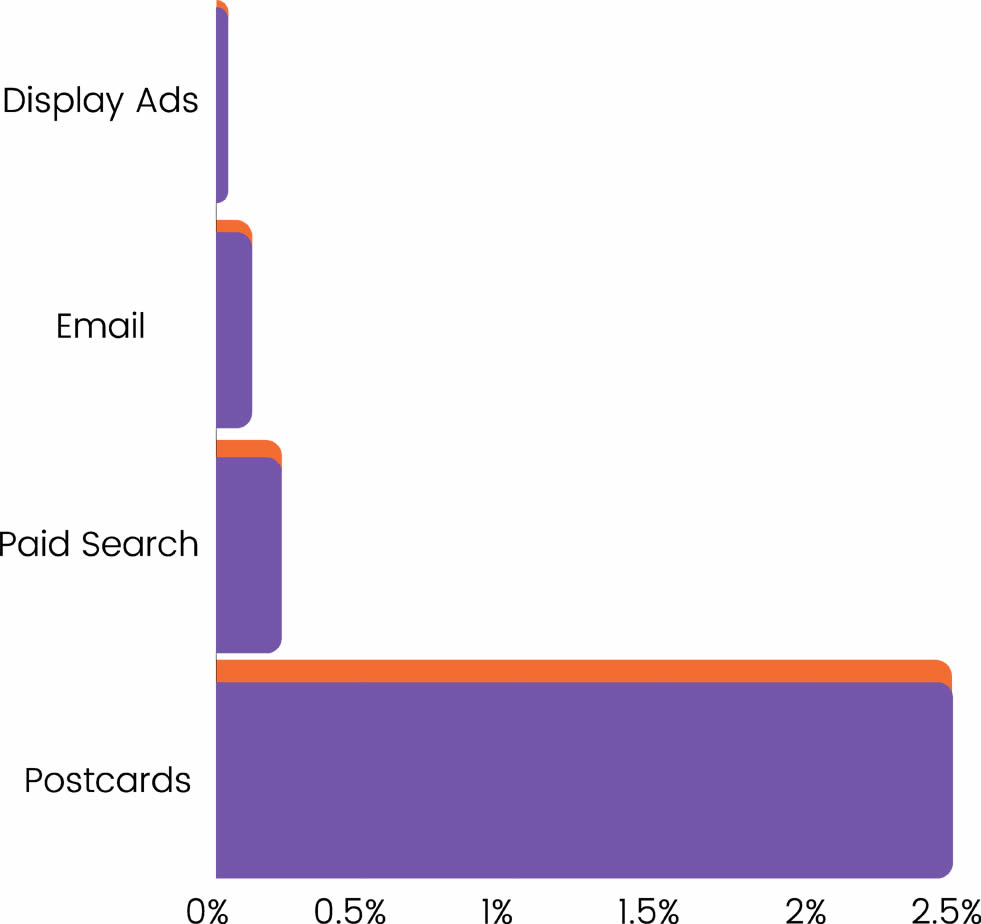
Of course, the answer is yes. Postcard marketing is not only effective, but it also competes with many digital platforms in terms of response rate and cost.
According to the Direct Marketing Association’s (DMA) Response Rate Report, the following are the average response rates by channel:
Postcard marketing is still a powerful tool for attracting new consumers and increasing sales. Plus, postcards are more potent than ever when combined with web browsing data, which is why so many huge firms employ them nowadays.
So we know it’s effective, but how well does postcard marketing work? According to some recent studies, very well. Here’s why you need to include postcards in your marketing stack.
Even younger generations enjoy receiving postcards.
According to a USPS survey, the majority of individuals enjoy receiving direct mail from brands they care about, with 56 percent stating that receiving direct mail is “a great pleasure.” In addition, a second study indicated that direct mail response rates for adults under 21 doubled in 2016.
Postcards with images are memorable and unforgettable.
According to a study conducted by Canada Post, brand memory is 70 percent higher for people who have received direct mail vs those who have seen a digital advertisement. This appears self-evident when you consider that postcards have an average lifespan of 17 days in your consumers’ homes, compared to 3 seconds or less for other media.
Keep Your Competitors in the Dark with Image Postcards
Your competitors will never know you’re mailing postcards, unlike with digital platforms. This implies they won’t be able to eavesdrop on your campaigns or steal your tactics.
So, how effective is postcard marketing? The bottom line is that postcard marketing works, and tools like Touchcard make it easier to execute, track, and automate than ever before. This tutorial will show you how to send effective postcard marketing campaigns that will pleasure your clients while increasing profits for your company.
Best Practices for Postcard Marketing
With anything worth doing there are always a few best practices you should follow for maximum success. That said, here are 7 postcard marketing best practices to help ensure your campaigns are profitable.
Make the Most of Your Efforts
The success of postcard marketing is nearly entirely determined by three variables. Your mailing list, your offer, and your presentation are all important factors to consider.
While other marketing channels rely on unseen algorithms and factors that are difficult to see or control, postcard marketing allows you nearly complete control over the factors that have the greatest impact on your success.
There is some disagreement over how much weight each component should carry, but it’s commonly broken down as follows:
In following chapters, we’ll go over each of these factors in greater depth, but for now, remember that your postcard marketing campaign will be effective if you concentrate your efforts where you have the greatest clout.
Quickly get to the point…
When done correctly, postcard marketing is one of the most engaging media accessible today. People, on the other hand, check their mail fast to see what’s important and what’s not.
This means that in three seconds or less, your recipients must understand what you’re delivering and why it’s relevant to them. To ensure that your postcard receives the attention it deserves, get right to the point with a compelling offer.
While postcards have more space than a search ad, they still have limitations. Don’t clog up your design with unnecessary and distracting information. Only include what you need to catch people’s attention and get the response you want.
Take a Look at the Products
Unlike digital marketing mediums, it’s too late to change your copy or tweak the alignment of your visuals after your mailer hits the streets. If you’re having a third party print and fulfill your postcards, request a few tangible examples to see how your postcard will look before you commit.
Everything should be double-checked, including the physical aspects such as print and paper quality, which cannot be viewed on a computer screen. If a corporation refuses to offer free proofs, think again.
Calculate Your Success
Today’s marketers are pampered. Pay-per-click platforms keep track of everything automatically, including metrics you don’t need. While most automated postcard marketing platforms provide some data, don’t expect the same level of information that you’d find on Facebook. You may wish to add your own tracking layer to make it easier to measure crucial metrics, which we’ll cover later.
Maximize Your Chances of Success
Marketing programs that have been brutally tuned for optimum ROI are the most successful. This is true for all forms of direct marketing, including postcards.
Treat the first few mailings as a way to acquire some baseline data, then use the subsequent mailings to try tiny changes that will increase response. With each mailing, your goal is to outperform the one before it.
Relying on Relevance is a good idea.
Relevance is crucial in postcard marketing if you want your postcard to stand out in a sea of rubbish and get the attention it deserves. The most successful mailings deliver highly relevant offers to the correct people at what appears to be the ideal time.
You must pay special attention to audience selection and your offer to attain this level of relevance. Your postcards will be welcomed by your recipients if you do this.
Keep an eye on the clock.
If at all possible, have your postcard sent on less busy days of the week to avoid competing for attention with other mail. In general, Tuesdays and Thursdays are the best days to visit, whereas Mondays should be avoided.
Other timing elements to consider include when your recipients are most likely to respond to your postcard marketing, which you’ll learn about later in the guide.
